
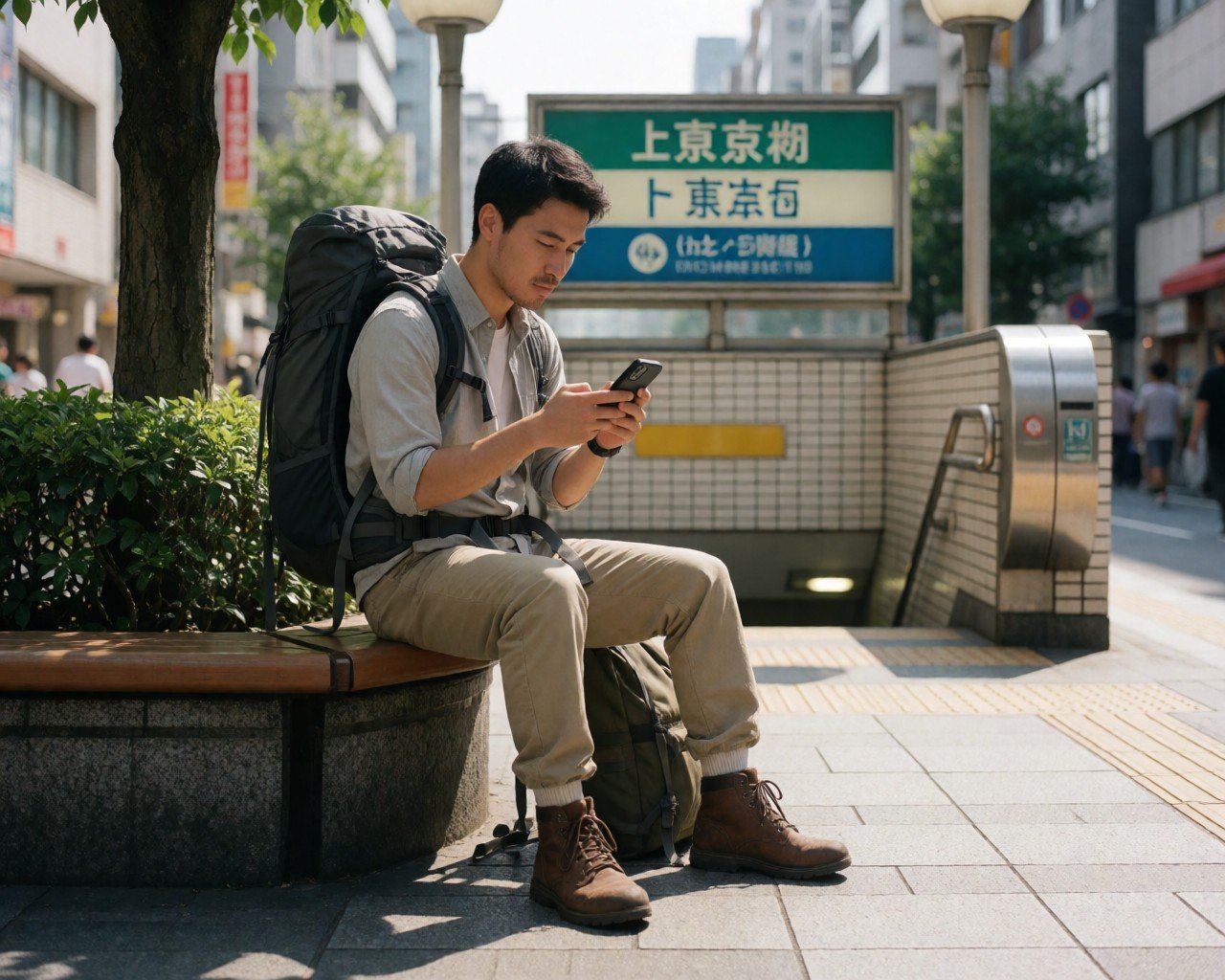
Best Budget Japan eSIM Plans for Cheap Data in 2025
Why a Budget Japan eSIM Makes All the Difference
Japan is one of the most connected countries on the planet, but that doesn’t mean getting affordable mobile data there is straightforward. Airport SIM card counters charge premium prices, pocket Wi-Fi rentals add bulk to your bag, and free public Wi-Fi is more limited than most travellers expect. An eSIM solves all of these problems — and if you pick the right plan, it won’t cost much either.
This guide breaks down the most affordable eSIM plans available for Japan in 2025, compares key features like data caps, network quality, and pricing, and helps you figure out which option actually fits your trip. Whether you’re spending a week in Tokyo or a month bouncing between Osaka, Kyoto, and Hokkaido, there’s a budget-friendly eSIM out there that works.
TL;DR — Best Budget Japan eSIM Plans at a Glance
If you’re short on time, here’s the quick summary:
Best overall value: Traveller eSIM’s Japan plans offer competitive pricing with strong network coverage across major cities and rural areas. If you want affordable eSIM Japan unlimited data, their unlimited options are hard to beat at this price point.
Best for light users (under 3GB): Airalo and Ubigi both offer inexpensive short-duration plans starting around $4–$5 for 1GB.
Best for heavy data use: Holafly and Traveller eSIM provide unlimited daily data plans that cap out at reasonable monthly totals, keeping you streaming and navigating without throttle anxiety.
Best for extended stays: IIJmio’s visitor-specific plans and Simify’s 30-day options give long-stay travellers more flexibility.
Now, let’s get into the details.
What to Look for in a Cheap Japan eSIM
Not every “budget” plan is actually a good deal. Before comparing prices, understand what separates a smart purchase from a false economy.
Network Coverage and Speed
Japan’s mobile infrastructure runs primarily on three carriers: NTT Docomo, SoftBank, and KDDI (au). Most eSIM providers for travellers piggyback on one or more of these networks as MVNOs (mobile virtual network operators). Docomo generally offers the widest rural coverage, while SoftBank and KDDI are equally strong in urban areas.
A cheap plan that routes through a lesser-prioritised MVNO arrangement might deliver slower speeds during peak hours in Shibuya or Shinjuku. Always check which underlying network an eSIM provider uses before buying.
Data Caps vs. Unlimited Plans
There are two main pricing structures: fixed data pools (e.g., 3GB, 5GB, 10GB for a set number of days) and unlimited daily data plans. Fixed pools tend to be cheaper upfront but can run out fast if you rely heavily on Google Maps, translate apps, and social media. Unlimited plans cost more per day but remove the stress of rationing data.
For most budget travellers spending 7–14 days in Japan, a plan in the 5GB–10GB range or an affordable unlimited option hits the sweet spot between cost and convenience.
Activation and Compatibility
All eSIM plans require a device that supports eSIM — most iPhones from the XS onward, Samsung Galaxy S20 and newer, Google Pixel 3 and up, and many other recent Android phones. Check your phone’s compatibility before purchasing. Also confirm your device is carrier-unlocked, especially if you bought it on a contract.
Some providers let you install the eSIM before arriving in Japan, so it activates automatically when you land. Others require manual activation. Instant install is always preferable for budget travellers who don’t want to waste time at the airport.
Comparing the Best Budget Japan eSIM Plans for 2025
Below is a detailed comparison of eSIM providers offering affordable Japan data plans. Prices reflect standard retail rates as of early 2025 and may vary slightly based on promotions.
Traveller eSIM
Traveller eSIM offers a range of Japan-specific plans that balance affordability with solid performance. Their eSIM Japan plans include both capped data packages and unlimited options, with coverage running on major Japanese networks.
What stands out here is the pricing on unlimited plans. Many providers charge $8–$12 per day for unlimited Japan data, but Traveller eSIM keeps costs noticeably lower, especially on longer durations. Their 7-day and 15-day unlimited plans are particularly competitive, making them a strong pick for travellers who don’t want to count megabytes while navigating train transfers in Osaka or streaming content at their ryokan.
Activation is straightforward — you receive a QR code after purchase and can install before departure.
Airalo
Airalo is one of the largest eSIM marketplaces globally, offering Japan plans from multiple operators. Their entry-level Japan plan starts around $4.50 for 1GB over 7 days, which is one of the cheapest options available anywhere.
The trade-off? Airalo’s budget tiers are data-only with relatively small pools. The 1GB plan works for a weekend trip where you mostly use Wi-Fi, but it evaporates fast with regular navigation use. Their 5GB/30-day plan (around $16) is a better middle ground. No unlimited Japan option is available at the lowest price tiers, which limits Airalo’s appeal for data-heavy travellers.
Holafly
Holafly has positioned itself as the go-to for unlimited data eSIMs, and their Japan plan delivers on that promise. Pricing starts at roughly $6 per day for unlimited data on 5-day plans, scaling down per day as you extend duration.
The catch? “Unlimited” comes with fair-use policies. Some users report speed throttling after high daily consumption, typically around 2–3GB per day of high-speed data before reduced speeds kick in. For most travellers, this is more than enough. But if you plan to tether your laptop or stream video constantly, be aware of the limits behind the marketing.
Holafly runs on SoftBank’s network in Japan, which provides excellent coverage in Tokyo, Osaka, Kyoto, Hiroshima, and other major tourist corridors.
Ubigi
Ubigi, backed by Transatel (a subsidiary of NTT), offers Japan plans starting at about $4 for 500MB. Their pricing is granular — you can buy exactly the data amount you need, which is useful if you’re a light user who just wants maps and messaging.
Their 3GB/30-day plan at approximately $9 is one of the cheapest per-GB options available for Japan. Ubigi also uses Docomo’s network, which means strong coverage even in more rural areas like Takayama, Nikko, or the Japanese Alps. The downside is their app interface, which some users find clunky compared to competitors.
Simify
Simify offers fixed data Japan eSIM plans ranging from 1GB to 20GB, with 30-day validity across all tiers. Their 10GB plan sits around $25–$30, making it a reasonable option for two-week trips with moderate usage.
Simify doesn’t offer an unlimited plan for Japan, so it’s best suited for travellers who can estimate their data needs accurately. Their network partner in Japan provides solid 4G LTE speeds in metropolitan areas.
Nomad eSIM
Nomad (nomadesim.com) markets affordable regional and country-specific plans. Their Japan offerings include 1GB, 3GB, 5GB, and 10GB options with 30-day validity. Pricing is competitive — their 5GB plan costs around $12, undercutting several major competitors.
Nomad uses Docomo or SoftBank depending on the specific plan, and speeds are generally reliable. They don’t have an unlimited tier, but for travellers who want a straightforward, cheap data pool, Nomad is a solid choice.
IIJmio (Japan Travel SIM)
IIJmio is a Japanese MVNO that offers visitor-specific eSIM plans. As a domestic provider, their pricing and network integration can be slightly better optimised than international alternatives. Plans include 2GB, 5GB, and 10GB options valid for up to 30 days, and they run on Docomo’s network.
The main limitation is the purchase and setup process, which isn’t as seamless as international eSIM stores. Some steps require Japanese-language navigation, and support resources lean technical. According to the Japan National Tourism Organization, millions of visitors now rely on eSIM rather than physical SIM cards, and domestic providers like IIJmio are increasingly streamlining their processes to keep up.
How Much Data Do You Actually Need in Japan?
One of the biggest mistakes budget travellers make is overbuying or underbuying data. Here’s a realistic breakdown of daily consumption for a typical Japan trip:
Light usage (maps, messaging, occasional social media): 300–500MB per day
Moderate usage (navigation, photo uploads, research, translation apps): 500MB–1GB per day
Heavy usage (video calls, streaming, tethering): 1.5–3GB+ per day
For a 10-day trip with moderate usage, you’d need roughly 5–10GB total. Most accommodation in Japan offers Wi-Fi, so your mobile data usage drops significantly during evenings. Factor that into your calculation before paying extra for an unlimited tier.
That said, if peace of mind matters more than saving a few dollars, an eSIM Japan unlimited data plan eliminates the mental overhead of monitoring your balance entirely.
Tips to Save Even More on Japan eSIM Data
Pre-Download Offline Maps
Google Maps allows you to download entire city regions for offline use. Grab Tokyo, Osaka, and Kyoto before your flight, and you’ll cut your navigation data usage by more than half.
Use Wi-Fi Strategically
Japan’s convenience stores (7-Eleven, FamilyMart, Lawson) offer free Wi-Fi, as do most train stations and shopping centres. Offload large uploads and downloads to these hotspots and reserve your eSIM data for on-the-go essentials.
Disable Background App Refresh
Apps like Facebook, Instagram, and cloud backup services silently consume data in the background. Switch these to Wi-Fi-only mode in your phone settings before activating your eSIM.
Buy Before You Fly
eSIM plans purchased in advance are almost always cheaper than those bought at Japanese airports or convenience stores. Install your eSIM Japan plan the day before departure and activate it the moment you land — no queues, no jet-lagged decision-making.
Compare Multi-Day vs. Per-GB Pricing
Some plans look cheap on a per-day basis but expensive per gigabyte, and vice versa. Calculate your likely total usage, then compare accordingly. A $20 plan for 10GB over 30 days is $2 per GB, while a $6/day unlimited plan over 10 days totals $60. The right choice depends entirely on how you use your phone.
Japan eSIM vs. Pocket Wi-Fi vs. Physical SIM — Quick Comparison
eSIM advantages: No physical card to lose, instant digital delivery, easy switching between plans, no device to carry or charge, works with dual-SIM phones so your home number stays active.
Pocket Wi-Fi disadvantages: Requires carrying and charging a separate device, must be returned at the airport, typically $5–$10 per day for decent plans, shared bandwidth if multiple devices connect.
Physical SIM disadvantages: Requires visiting a store or having it mailed in advance, risk of losing the tiny card, must swap out your existing SIM or use a dual-SIM tray.
For budget-conscious travellers, eSIMs win on convenience, flexibility, and increasingly on price. The GSMA reports that eSIM adoption continues to accelerate globally, with travel connectivity being one of the primary use cases driving consumer uptake.
Which Budget Japan eSIM Should You Choose?
Here’s the simplified decision tree:
Spending under a week and mostly using Wi-Fi? Grab a 1–3GB plan from Airalo, Ubigi, or Nomad. You’ll spend under $10.
Travelling for 7–14 days with moderate use? A 5–10GB plan from Traveller eSIM, Nomad, or Simify keeps costs between $12–$30 while covering all your navigation, translation, and social needs.
Want zero data stress for any trip length? Go with an unlimited plan from Traveller eSIM or Holafly. The daily cost is higher, but you’ll never think twice about opening Google Maps, uploading photos, or video-calling home from a Shinkansen.
Staying longer than two weeks? IIJmio’s visitor plans or a larger data pool from Simify give you 30-day validity without breaking the bank.
Frequently Asked Questions
What is the cheapest Japan eSIM plan available?
The cheapest Japan eSIM plans start around $4–$5 for 500MB to 1GB of data with 7-day validity. Providers like Airalo and Ubigi offer these entry-level options. However, for better value per gigabyte, plans in the 3–5GB range typically cost $9–$16 and provide more usable data for a real trip.
Can I get unlimited data on a budget Japan eSIM?
Yes. Several providers offer unlimited Japan eSIM plans at reasonable prices. Traveller eSIM and Holafly both have unlimited options, though fair-use throttling may apply after high daily consumption. Expect to pay around $5–$8 per day depending on the plan duration.
Which network do Japan eSIMs use?
Most Japan eSIM plans run on NTT Docomo, SoftBank, or KDDI (au) networks through MVNO agreements. Docomo generally offers the best rural coverage, while all three perform well in major cities like Tokyo, Osaka, and Kyoto.
Do I need to unlock my phone to use a Japan eSIM?
Yes. Your phone must be carrier-unlocked and eSIM-compatible. Most iPhones from the XS onward, Samsung Galaxy S20 and newer, and Google Pixel 3 and later models support eSIM. Check with your carrier or phone manufacturer if you’re unsure about your device.
How much data do I need for a week in Japan?
For a typical 7-day trip with moderate smartphone usage — maps, messaging, social media, and translation apps — 3–5GB is usually sufficient. If you stream video, make video calls, or use your phone as a mobile hotspot, consider a 10GB or unlimited plan to avoid running out mid-trip.
Can I install my Japan eSIM before travelling?
Yes. Most eSIM providers let you purchase and install your eSIM profile before departure. The eSIM typically activates when your phone connects to a Japanese network upon arrival. This is the recommended approach so you have mobile data the moment you land at Narita, Haneda, or Kansai International Airport.