Best Japan eSIM for Short Trips (3 to 7 Days): Stay Connected Without Overpaying
Why a Short Trip to Japan Demands the Right eSIM
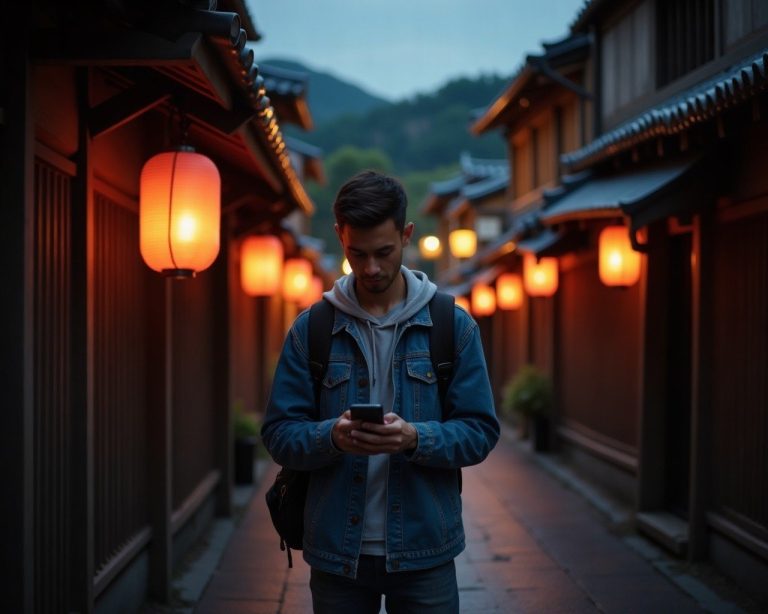
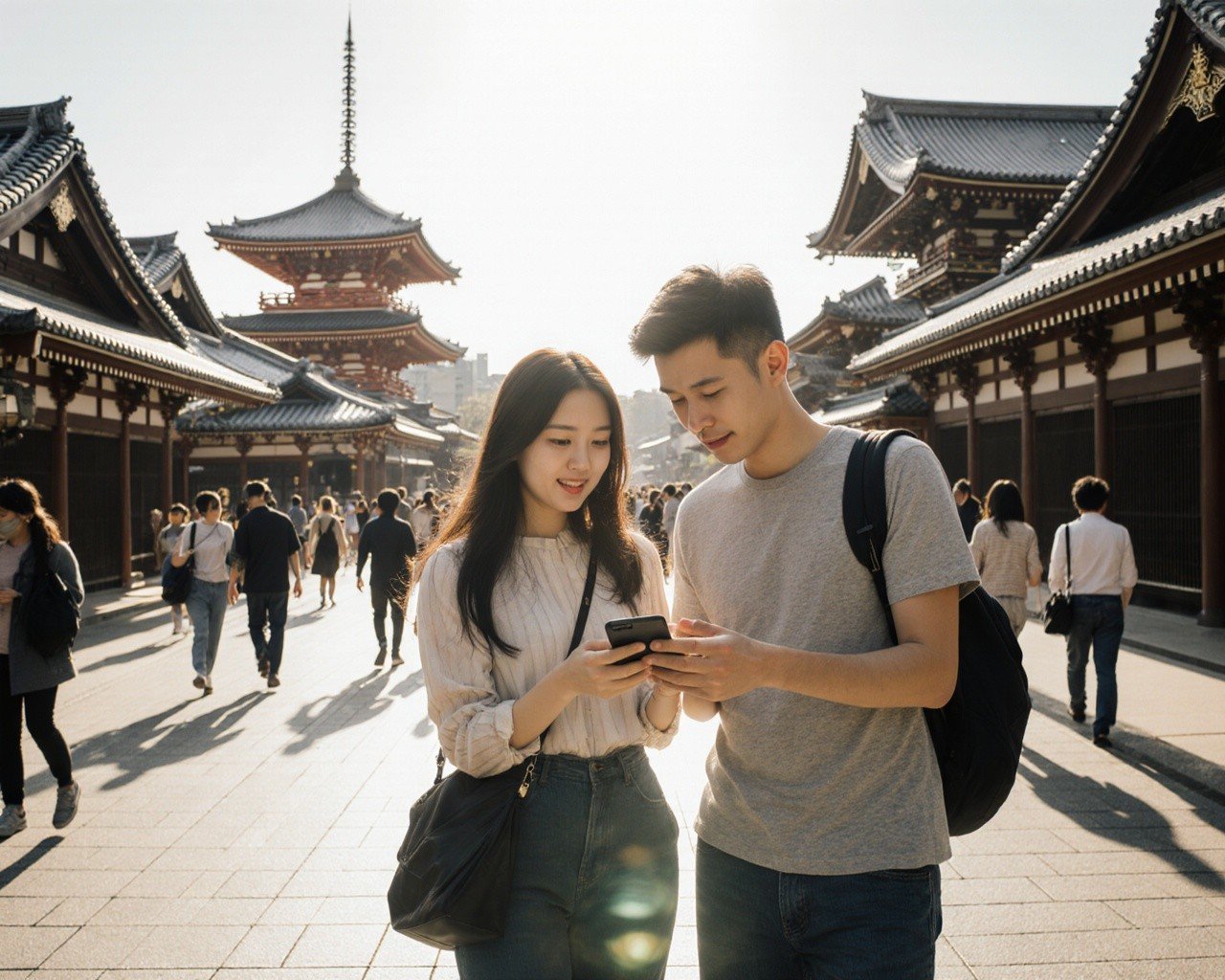
Three to seven days in Japan might sound brief, but the pace is relentless. You’ll navigate Tokyo’s subway system, translate restaurant menus in Kyoto, grab last-minute Shinkansen tickets, and share photos from Fushimi Inari before the jet lag wears off. Every one of those tasks depends on reliable mobile data — and the wrong connectivity choice can drain your budget or leave you scrambling for Wi-Fi in a convenience store.
Traditional pocket Wi-Fi rentals add pickup and return logistics. Physical SIM cards mean finding a vending machine at the airport. An eSIM sidesteps all of that. You install it before you board, activate it when you land, and you’re online before you clear customs. For short-stay travellers, it’s the most practical option available.
This guide focuses specifically on trips lasting three to seven days. We’ll compare plan structures, data allowances, network quality, pricing tiers, and the small details — like tethering support and customer service hours — that matter when your trip is too short to waste time troubleshooting.
TL;DR — Quick Picks for 3 to 7-Day Japan eSIMs
If you’re short on time, here’s the summary. For unlimited high-speed data on a brief visit, check the eSIM Japan unlimited data plans at Traveller eSIM. They offer straightforward pricing, run on Japan’s major carrier networks, and don’t throttle you into unusable speeds after a small data cap. For budget-conscious travellers who mainly need maps and messaging, a 1-3 GB capped plan from providers like Airalo or Ubigi can work — but read the fine print on throttling thresholds.
What to Look for in a Short-Trip Japan eSIM
Data Allowance — Capped vs. Unlimited
Most eSIM providers offer two structures: capped plans (typically 1 GB to 10 GB) and unlimited plans. For a three-day Tokyo city break, 1 GB per day is usually enough for maps, translation apps, ride-hailing, and moderate social media use. A seven-day trip spanning multiple cities — especially if you’re streaming music, video calling home, or using your phone as a hotspot — burns through capped plans fast.
The distinction between “unlimited” plans matters too. Some providers advertise unlimited data but throttle speeds to 128 Kbps or 256 Kbps after you hit a fair-use ceiling of 500 MB to 1 GB per day. At those speeds, Google Maps barely functions. True unlimited plans maintain usable 4G or 5G speeds throughout your validity period. Always check whether “unlimited” means genuinely unrestricted or just technically never cuts off.
Network Coverage and Speed
Japan’s mobile infrastructure is among the best globally. The three major carriers — NTT Docomo, SoftBank, and KDDI (au) — blanket urban areas with strong 4G LTE and expanding 5G coverage. Most travel eSIM providers connect to either NTT Docomo or SoftBank networks as MVNOs (mobile virtual network operators).
For short trips, the practical difference between Docomo and SoftBank is minimal in cities like Tokyo, Osaka, and Kyoto. If your itinerary includes rural areas — say, the Japanese Alps, parts of Hokkaido, or smaller islands in Okinawa — Docomo generally has a slight edge in remote coverage. According to NTT Docomo’s coverage map, their LTE network covers over 99.9% of Japan’s populated areas.
Validity Period and Activation Flexibility
A common mistake: buying a 30-day plan for a five-day trip because shorter options weren’t available. You’ll overpay for unused days. Look for eSIM providers that offer granular validity windows — 3-day, 5-day, and 7-day options are ideal for short visits.
Activation flexibility also matters. Some eSIMs activate the moment you install them on your phone. Others activate on first network connection in Japan. The second type is far better for travellers because you can install it at home, days before departure, and it won’t start counting down until you actually land. Always confirm the activation trigger before purchasing.
Tethering and Hotspot Support
Travelling with a partner or friend who has an older phone without eSIM capability? Tethering lets you share your data connection. Not every provider enables this. If hotspot functionality matters to you, verify it before buying. Many of the unlimited plans from travel eSIM providers do support tethering, but some restrict it to capped plans only.
Price
For 3 to 7-day plans, expect to pay between $4 and $25 depending on data volume and provider. Budget capped plans (1-3 GB) cluster around $4-$8. Mid-range plans with 5-10 GB sit between $10-$18. Unlimited high-speed plans for a week typically run $15-$25. That’s competitive with — or cheaper than — pocket Wi-Fi rental, with zero logistics overhead.
How Japan eSIM Providers Compare for Short Stays
Traveller eSIM
Traveller eSIM offers dedicated Japan plans with clear validity options that map well to short trips. Their eSIM Japan lineup includes both capped and unlimited data tiers. The unlimited plans are particularly strong for travellers who want to avoid monitoring usage — you install, activate, and forget about it. Plans run on reliable Japanese carrier networks, and tethering is supported. Activation happens on first use in Japan, so you can set everything up before your flight.
Airalo
Airalo is one of the most recognized names in the travel eSIM space. Their Japan plans start at 1 GB for 7 days (around $4.50), scaling up to 20 GB for 30 days. For short trips on a tight budget, their entry-level plans work if your data consumption is light. The downside: they don’t currently offer a true unlimited plan for Japan, and their higher-tier capped plans can feel expensive per-GB compared to competitors.
Holafly
Holafly focuses on unlimited data plans, which makes them appealing at first glance. Their Japan eSIM offers unlimited data for 5, 7, 10, or more days. However, multiple user reports indicate speed throttling during peak usage, and their plans tend to be priced at the higher end of the market. If consistent high-speed data matters — especially for navigation and translation in real time — test their speed claims against reviews before committing.
Ubigi
Ubigi, backed by Transatel, offers Japan data plans with reasonable pricing. They provide both pay-as-you-go and package options. Coverage runs on SoftBank’s network. For short trips, their 3 GB and 10 GB packages offer decent value, though the interface for purchasing and managing plans feels less polished than dedicated travel eSIM providers.
SimOptions and eSIM.net
Both SimOptions and eSIM.net function more as aggregators than direct providers. They list plans from multiple eSIM operators, which can be useful for comparison shopping. The trade-off is that customer support goes through the original provider, not the aggregator, which can create friction if something goes wrong during a short trip when time is limited.
Local Options — IIJmio, Sakura Mobile, SoftBank Visitor Plans
Japan-based providers like IIJmio, Sakura Mobile, and SoftBank’s visitor SIM offer competitive plans, but they often require in-country setup, Japanese documentation, or physical SIM pickup. For short-trip travellers who want everything configured before arrival, these add unnecessary complexity. They’re better suited for longer stays or residents.
Choosing Between Capped and Unlimited Plans for 3 to 7 Days
Here’s a practical framework. Estimate your daily data consumption based on actual usage patterns:
Light use (under 500 MB/day): Email, messaging apps, occasional map lookups, light social media browsing. A 3 GB plan covers a seven-day trip comfortably. Cost: $4-$8.
Moderate use (500 MB to 1.5 GB/day): Active navigation with Google Maps or Apple Maps, regular photo uploads to social media, translation apps running frequently, some video calls. A 5-10 GB capped plan or a short-term unlimited plan is the safer choice. Cost: $10-$18.
Heavy use (1.5 GB+/day): Streaming content, using your phone as a hotspot for a travel companion, constant video uploads, live-streaming. An eSIM Japan unlimited data plan is the only realistic option here. Cost: $15-$25.
For most short-trip travellers — particularly first-time visitors navigating an unfamiliar transit system — the unlimited option provides peace of mind that’s worth the small premium. Running out of data mid-trip in a country where you can’t read street signs is a stress you don’t need.
Step-by-Step: Setting Up Your Japan eSIM Before Departure
Step 1 — Confirm device compatibility. Most iPhones from XS onward and recent Samsung Galaxy, Google Pixel, and other Android flagship models support eSIM. Check your phone’s settings under “Cellular” or “Mobile Network” to verify.
Step 2 — Purchase your plan. Buy from a provider like Traveller eSIM’s eSIM Japan page. Select the validity period matching your trip length — 3, 5, or 7 days.
Step 3 — Install the eSIM profile. You’ll receive a QR code via email. Scan it through your phone’s eSIM settings. This adds the data plan as a secondary line on your device. Do this while you still have Wi-Fi at home — ideally 24 to 48 hours before departure.
Step 4 — Configure data settings. Set your new eSIM line as the default for mobile data. Keep your home SIM active for calls and texts if needed (or switch it off entirely to avoid roaming charges).
Step 5 — Activate upon arrival. When your plane touches down at Narita, Haneda, Kansai, or whichever airport you’re flying into, enable the eSIM data line and turn off airplane mode. Most plans connect within 30 seconds to two minutes.
Step 6 — Test immediately. Open a browser or maps app to confirm the connection is live. If there’s an issue, toggle airplane mode on and off or restart your device. The vast majority of eSIM activation issues resolve with a simple restart.
Pro Tips for Maximizing Your Japan eSIM on a Short Trip
Download offline maps. Even with unlimited data, having offline Google Maps or Apple Maps for Tokyo and Kyoto means faster load times underground where cell signals can be spotty in deep subway tunnels.
Use data-saving modes. If you’re on a capped plan, enable data saver in your phone settings and within individual apps. Instagram and TikTok consume enormous amounts of data in background refresh alone.
Pre-download translation packs. Google Translate’s offline Japanese language pack is roughly 60 MB. Download it before you leave. It works without any data connection for text translation and basic conversation.
Keep your home SIM active but data-off. This lets you receive SMS-based two-factor authentication codes from your bank or other services without triggering international roaming data charges.
Know your provider’s support hours. On a short trip, every hour matters. Choose a provider with 24/7 chat support or at least support hours that overlap with Japan Standard Time (UTC+9).
Common Mistakes to Avoid
Buying too much data. A 20 GB plan for a three-day trip is overkill for most people. Match the plan to your actual needs and trip length.
Assuming all “unlimited” plans are equal. As mentioned earlier, throttled unlimited plans can be essentially useless for anything beyond text messaging. Read the terms of service.
Forgetting to turn off home SIM data roaming. This is how surprise $200 phone bills happen. Disable data roaming on your primary SIM the moment you install your travel eSIM.
Waiting until arrival to set up. Airport Wi-Fi in Japan is good, but you’re adding 10-15 minutes of unnecessary hassle during a time when you’d rather be heading to your hotel. Install before you fly.
Not checking eSIM compatibility. Some carrier-locked phones don’t support eSIM even if the hardware does. Confirm with your home carrier that your device is unlocked for eSIM use.
Frequently Asked Questions
How much data do I need for a 3 to 7-day trip to Japan?
Light users — those relying on maps, messaging, and email — typically need 500 MB to 1 GB per day. Moderate users who actively post to social media, use navigation, and run translation apps consume 1-1.5 GB daily. Heavy users should choose an unlimited data plan to avoid running out during their trip.
Can I use my Japan eSIM for tethering or hotspot?
Many Japan eSIM providers support tethering and personal hotspot functionality, but it’s not universal. Always check the specific plan details before purchasing. Providers like Traveller eSIM generally support tethering across their Japan plan lineup, including unlimited tiers.
When does a Japan travel eSIM start counting validity days?
This depends on the provider. Most travel-focused eSIM companies activate the validity countdown when the eSIM first connects to a Japanese network — not when you install the profile on your phone. Confirm the activation trigger before buying so you don’t lose days before your trip even begins.
Is unlimited data really unlimited on Japan eSIM plans?
Not always. Some providers advertise unlimited data but throttle speeds to 128-256 Kbps after a daily fair-use cap, which renders most apps barely functional. Genuinely unlimited plans maintain usable 4G LTE or 5G speeds for the entire validity period. Read the fine print and check user reviews for real-world speed reports.
Do I need to remove my regular SIM to use a Japan eSIM?
No. Modern eSIM-capable phones support dual SIM operation. Keep your physical home SIM installed for receiving calls and SMS (useful for bank verification codes), and set the Japan eSIM as your mobile data source. Just remember to disable data roaming on your home SIM to prevent unexpected charges.
Which mobile network do Japan eSIM plans use?
The majority of travel eSIM plans for Japan operate on NTT Docomo or SoftBank networks via MVNO agreements. Both carriers provide excellent 4G LTE coverage across Japan’s cities and suburbs. For trips that include remote or mountainous areas, Docomo tends to have a slight advantage in coverage reach.